
Description
Imagine you’ve just launched a niche site and, despite solid content, your pages barely crack the top ten in search results. You might wonder if it’s your keyword placement, internal linking, or maybe something deeper in your on-page setup. Stephen Hockman’s Mastering On-Page SEO Course promises to address these gaps, offering not just theory but actionable strategies. But what specific tactics could actually move your site up the rankings?
Key Takeaways
- The course offers over 30 videos and 6.5 hours of actionable on-page SEO strategies from Stephen Hockman’s 15 years of expertise.
- It covers optimizing HTML elements, internal linking, and content creation for improved search engine rankings.
- Advanced modules include schema markup, privacy management, and building trust signals for better SEO performance.
- Learners gain practical techniques for keyword expansion, image optimization, and leveraging informational content to strengthen site authority.
- The course includes real-world case studies, continuous updates, and bonus resources for ongoing SEO support and learning.
Course Overview and Target Audience
Whether you’re aiming to boost your website’s rankings or shift to full-time online work, the Mastering On-Page SEO course equips you with practical skills through over 30 videos and 6.5 hours of focused content. This course distills Stephen Hockman’s 15 years of online marketing expertise into actionable lessons designed for real-world results. You’ll learn the most important on-page SEO techniques to optimize your site, regardless of your niche.
The course suits you if you’re serious about improving your SEO and ready to take action. It’s tailored for people who value expert guidance and want to master the essentials of on-page SEO without relying on expensive tools or backlinks. If you’re committed to applying what you learn and want to build sustainable, organic growth, you’ll benefit greatly. However, if you prefer passive learning or expect overnight results, this course isn’t the right fit for you.
Essential On-Page SEO Strategies
To boost your site’s visibility, you’ll need to optimize key HTML elements like title tags and meta descriptions with targeted keywords. Don’t overlook the power of internal linking—strategically connecting your pages can greatly enhance your rankings. Let’s look at how these essential on-page SEO strategies work together to strengthen your site’s performance.
Optimizing HTML SEO Elements
While search engines grow more sophisticated, optimizing your HTML SEO elements remains a fundamental strategy for boosting your site’s visibility. Focus on placing primary and secondary keywords strategically in title tags, meta descriptions, and header tags to improve your chances of ranking higher. Don’t overlook semantic SEO—use relevant keyword variations throughout your content to show search engines that your page addresses user intent thoroughly. Strike a balance between exact match keywords and related terms to avoid keyword stuffing, which can harm your rankings. Use descriptive alt text for images to enhance both accessibility and SEO performance. Make it a habit to regularly audit and update these HTML elements, ensuring your site adapts to algorithm changes and continues following best SEO practices.
Strategic Internal Linking
Although search engines constantly refine how they evaluate websites, strategic internal linking remains a powerful on-page SEO tool you can control. By placing 3-5 internal links per page, you can boost authority, almost matching the value of an external backlink. Use targeted internal linking with a strong anchor text strategy: aim for 60% exact match keywords, 30% partial matches, and 10% variations. This approach signals clear relevance to search engines and supports better rankings. Regularly audit your internal links to guarantee each page uses unique, descriptive anchor text—never generic—so search engines understand your content’s context. Balance your site’s content by keeping 50-60% informational articles, which gives you more opportunities for strategic internal linking.
| Anchor Strategy | Content Ratio | Audit Frequency |
|---|---|---|
| 60% Exact Match | 50-60% Info | Quarterly |
| 30% Partial Match | 40-50% Other | Biannually |
| 10% Variations | N/A | Ongoing |
| Descriptive Text | Balanced | As Needed |
Content Creation Techniques for Higher Rankings
When you want your content to climb search engine rankings, mastering effective creation techniques is essential. Start with content writing that prioritizes semantic SEO—use relevant variations of your primary and secondary keywords naturally throughout your text. This strategy increases your content’s relevance, helping search engines understand and rank your pages more effectively.
Focus on producing high-quality, human-written content that demonstrates expertise and accuracy. Monitor engagement metrics like bounce rate and average time on page to measure user satisfaction and content effectiveness. Optimize HTML elements—such as meta tags, headers, and URLs—by placing keywords thoughtfully and keeping them clear and concise.
Maintain a balanced content ratio, ensuring 50-60% of your site remains informational. This prevents thin content penalties and supports your site’s authority. Diversify your content types, mixing articles, guides, and multimedia to engage a wider audience and boost overall site performance. These content creation techniques set the foundation for higher search rankings.
Advanced Internal Linking Methods
Once you’ve built strong, optimized content, the next step is to leverage advanced internal linking methods to maximize your SEO gains. Internal linking isn’t just about navigation—it’s a strategic tool that can greatly boost page authority. Studies reveal that inserting 3-5 internal links on a page can have the same ranking impact as one external backlink, making your internal linking strategy essential.
To get the most out of internal linking, target specific keywords with each link. Use an anchor text distribution of 60% exact match, 30% partial match, and 10% variations. This balance sends clear signals to search engines while avoiding keyword cannibalization. Regularly audit your internal linking structure to guarantee each page uses unique anchor text, reinforcing its individual value.
Strategically connect your informational content to buying guides or relevant posts. This not only strengthens authority but also improves user navigation, making your site more effective and user-friendly.
Schema Implementation and Trust Signals
Now, let’s look at how schema can instantly boost your site’s credibility and help you stand out in search results. You’ll learn which trust-building elements matter most and how to balance transparency with privacy when sharing business details. By getting these essentials right, you’ll strengthen both your online visibility and your reputation.
Boosting Credibility With Schema
Although search engines have become more sophisticated, they still rely on clear signals to assess a website’s credibility. By implementing schema, you give search engines structured data they can easily interpret, which in turn boosts your site’s trustworthiness and visibility. Schema markup can enhance your search listings with rich snippets, displaying extra details like ratings or business information, and potentially increasing your click-through rates by up to 30%.
Displaying business details—such as addresses and phone numbers—through schema isn’t just about SEO; it’s about establishing your site as a legitimate operation. If you’re concerned about privacy, simply use virtual phone numbers or business addresses. When you use schema correctly, you send strong trust signals to both search engines and users, setting your site apart in competitive markets.
Essential Trust-Building Elements
Trust signals form the backbone of a credible website, and schema implementation is one of the most effective ways to establish them. By adding schema to your site, you enhance your web pages with structured data, making it easier for search engines to display rich results. This boosts both trustworthiness and credibility, not just in the eyes of search engines but also for your visitors. Even if you’re running a one-person operation, like Stephen Hockman, it’s smart to implement schema for essential business information—such as your address and phone number. Accurate contact details and visible schema signals show users your business is legitimate. Developing a clear strategy for trust signals, including schema, will strengthen your site’s legitimacy and can directly improve your SEO performance.
Privacy in Business Details
One smart way to balance privacy with credibility is by carefully managing the business details you include in your schema markup. When adding organization details, you don’t always have to use your personal address or phone number. Virtual office options or business phone services can protect your privacy while still satisfying schema markup requirements. By implementing schema markup for organization and contact details, you’re sending clear trust signals to both search engines and users. This boosts your site’s legitimacy and can improve your visibility with rich results, increasing your click-through rates. Remember, regularly update your schema elements to keep pace with evolving search engine standards. This ongoing attention guarantees you maintain trustworthiness and compliance, all while keeping your sensitive business information secure.
Keyword Expansion and Optimization Tactics
When you want to maximize your page’s visibility, effective keyword expansion and optimization tactics are crucial. Start by using advanced techniques to identify secondary keywords your page already ranks for—these hidden gems can drive additional traffic. Don’t just settle for your primary keywords; expand your strategy by targeting related queries that your audience is searching for. This not only increases your overall keyword rankings but also attracts a broader audience.
To make the process more efficient, leverage a freely available keyword research tool. This tool helps you uncover new keyword opportunities and guarantees your content aligns with user search intent, keeping your rankings strong over time. Remember, Google rewards pages that deliver what users want.
Focus your efforts on:
- Extracting and optimizing for secondary keywords
- Expanding content to include relevant queries and topics
- Aligning every piece of content with search intent
Image Optimization Best Practices
To keep your website fast and visually appealing, you’ll want to start with images sized at 1200 x 628 pixels for ideal clarity and performance. Compressing your images with reliable tools can dramatically cut file sizes, speeding up your page loads. Let’s look at how choosing the right dimensions and compression methods can boost both user experience and SEO.
Ideal Image Dimensions
Getting your image dimensions right is crucial for both user experience and SEO. When you properly size your images, you improve loading speed and maintain high visual quality, which are key elements of effective image optimization. The ideal image dimensions for most web applications are 1200 x 628 pixels. This size strikes a balance between crisp display and fast performance, making your pages more engaging for users and search engines. To make the most of your image optimization efforts, remember to:
- Use JPEG for photographs and PNG for images needing transparency, ensuring superior quality and efficiency.
- Always include alt text to boost accessibility and give context to search engines.
- Regularly monitor image performance and address any web crucial errors that impact your site’s health.
Getting dimensions right sets a strong foundation.
Compression Tools Overview
A key step in image optimization is using compression tools to shrink file sizes while preserving visual quality. When you compress images, you help your site load faster and provide a smoother user experience. Many compression tools—like TinyPNG, ImageOptim, or ShortPixel—let you reduce file sizes dramatically without noticeable loss in quality. This is essential for maintaining ideal loading times, especially since unoptimized images can slow down your site and hurt your SEO rankings.
For best results, always start with the recommended image size (1200 x 628 pixels), then apply compression. Regularly monitor your site’s image performance and address any web significant errors related to image optimization. By combining proper sizing and effective compression, you’ll boost your Core Web Vitals scores and enhance your search engine visibility.
Content Ratio and Niche Site Strategies
Many successful niche sites rely on a well-balanced content ratio to strengthen authority and drive conversions. If you want your site to perform well, aim for 50-60% informational content. This approach helps you avoid penalties for thin content and signals expertise to search engines. Don’t ignore how strategic internal linking can boost the authority of your buying guides by connecting them to relevant informational articles. Your choice of niche also shapes your strategy—narrow niches may deliver quick wins, while broader topics allow for brand growth and long-term engagement.
To maximize your niche site’s potential, focus on:
- Maintaining a healthy content ratio with a mix of informational posts and product reviews.
- Using internal links from informational content to product guides to guide visitors and improve SEO.
- Regularly optimizing images (1200 x 628 pixels, compressed) for faster load times and a smoother user experience.
Balancing these elements drives both credibility and conversions.
Case Study: Real-World SEO Application
While on-page SEO theory offers valuable guidelines, nothing matches the impact of seeing proven strategies in action. In the Mastering On-Page SEO course, you’ll explore a detailed case study that showcases real-world SEO application against tough, high Domain Authority competitors. This case study demonstrates how optimizing meta tags, refining internal linking, and structuring content effectively can dramatically improve your rankings.
By examining this case study, you’ll see how targeting the right keywords and aligning your content with user intent leads to measurable increases in organic traffic. The course breaks down each step, providing insights into troubleshooting ranking issues and showing how targeted optimizations directly influence performance metrics over time.
You’ll gain access to exclusive data from the case study, empowering you to replicate these strategies on your own site. By applying these tactics, you’ll be equipped to achieve higher visibility and outperform your SEO competition.
Bonus Resources and Ongoing Support
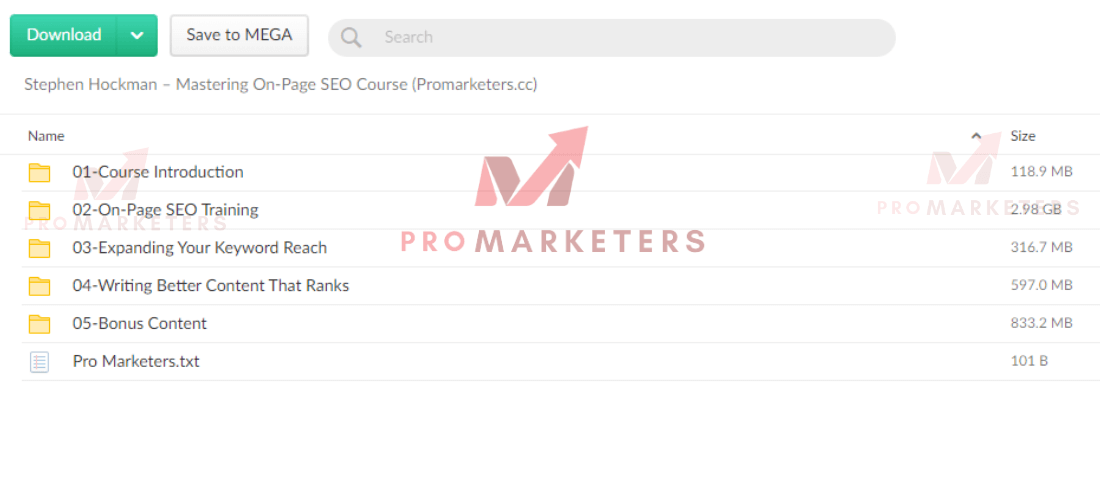
Beyond the core lessons, you’ll get immediate access to a suite of bonus resources designed to accelerate your on-page SEO progress. These extras go far beyond standard training, giving you practical tools and ongoing support to guarantee lasting success. With lifetime access, you can revisit all 27 exclusive training videos, valued at $499, and stay updated as new SEO strategies emerge. The must-have on-page SEO cheatsheet helps you quickly apply techniques, while the bonus case study video lets you see exactly how these strategies work on a live site.
You’ll also gain access to:
- Advanced internal linking strategies to boost your site’s SEO power
- Competitor analysis techniques for staying ahead in your industry
- Continuous access to updated materials and support as SEO evolves
With these bonus resources, you’re never left on your own. This ongoing support guarantees you’ll always have the latest knowledge and practical insights to keep your SEO game ahead of the curve.
Conclusion
By enrolling in Stephen Hockman’s Mastering On-Page SEO Course, you’re setting yourself up for real, measurable results. Did you know that websites with well-optimized on-page SEO can see up to a 200% increase in organic traffic within a few months? With actionable strategies, expert content creation tips, and ongoing support, you’ll have everything you need to boost your rankings and build a successful online presence—no guesswork, just proven results. Immerse yourself and see the difference for yourself!


