
Description
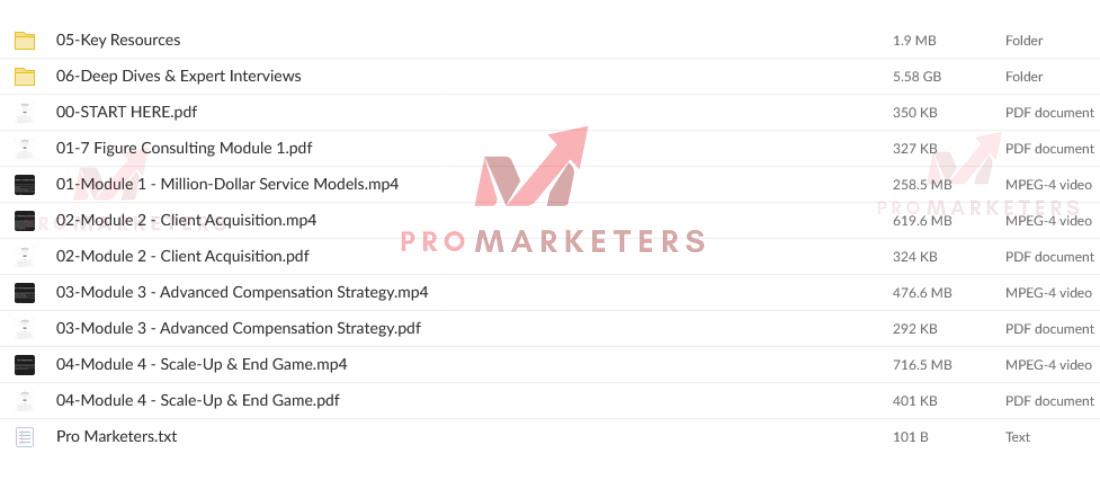
7 Figure Consulting is a course that teaches a high-ticket consulting client acquisition system. It emphasizes transparent offer design, lean outreach, and proof-driven positioning to secure enterprise or growth-stage clients. The framework relies on low-volume, high-fit prospecting, short-form case assets, and rapid validation loops. It references actual campaign math, such as reply, call, and close rates, to highlight where improvements originate. It reveals how to scope clean offers, price by outcomes, and set light ops. For additional context, it maps channels like warm email and partner leads, as well as niche research steps. To step ahead, the following sections deconstruct the model, funnel steps, benchmarks, and tools, with examples.
The 7 Figure Consulting Mindset
Transitioning to a 7-figure consulting business involves moving from selling time to designing outcomes. This approach rewards closeness to value and strategic business leverage, resonating particularly with agile firms, including venture-funded startups and small to mid-market companies in the 7–9 figure range.
Beyond Trading Time
Hourly billing and flat retainers limit earning potential and invite scope creep in consulting businesses. The ‘trial and error’ route can scorch years and millions left on the table, particularly when work meanders into low-value tasks. Value consulting ties fees to outcomes that matter: revenue growth, lower CAC, and market entry. Instead of project-based deliverables, consider leveraged plays like a conversion overhaul for a core funnel or a pricing reset across one region to enhance your consulting practice.
Spot waste in traditional consulting models—such as weekly status calls and bloated reports. Cut them. Build tight scopes that fix bottlenecks with high leverage: one landing page that drives 80% of paid traffic or a procurement process that compresses cycle time from 90 to 30 days. This approach is essential for developing a successful consulting business.
Hold time for high-value moves. Go beyond busywork. Aim for projects that can plausibly contribute 7 figures in upside and last 12–24 months, because long arcs generate runway and compounding victories. This strategy is key for creating extraordinary client value and establishing sustainable consulting operations.
Ultimately, focus on projects that align with your target audience’s needs. The goal is to foster strategic business partnerships that lead to client growth. By prioritizing high-impact initiatives, consultants can optimize their client acquisition process and enhance their overall consulting journey.
The CEO Mentality
Run your practice like a firm, not a job. Think in terms of models, margins and pipelines. Package your services to be frictionlessly excellent for million dollar projects and evade one off pieces of work that dilute signal.
Delegate execution early. Employ vetted freelancers or partner boutiques for research, ops, and production so you can focus on growth, partnerships, and advanced networking that opens doors to 7–9 figure clients.
Set milestones in plain numbers: qualified intros per month, win rate by segment, deal cycle time, gross margin per project. Track pipeline value and cash flow. Take those learnings to update and evolve your ICP, messaging, and channels of outreach.
Value Over Hours
Focus on a handful of leverage-producing activities. Charge for impact using performance tiers, revenue shares or stock options when risk and measurability meet.
Leverage quantified-change case studies. Show the lift: “+18% conversion on the core funnel,” “€2.1M net new ARR in 9 months,” “Churn down 2.4 points.” Make them short, concrete, and measurable.
Teach prospects why value trumps hours. Days reward productivity. Value rewards the result they really require. Link fees to milestones, incorporate upside for exceeding targets, cap meetings to preserve focus.
Core 7 Figure Consulting Framework
At the heart of this consulting business framework is proximity to value—engineering bite-size, leverage-focused acts that spark outsized impact—then pricing and packaging initiatives to claim an equitable portion of the upside. Scope is tight, busywork is cut, and proposals are “rigged” for easy approval by tying compensation to clear, measurable wins in client growth.
-
Choose a niche of pressing, valuable issues and unsatisfied need.
-
Identify and outline high-impact actions that quickly influence essential metrics (conversion, churn, CAC/LTV)
-
Build a narrow scope around those activities exclusively. trim nice-to-haves
-
Price with performance tiers, rev share, or equity. Balance risk and upside.
-
Package delivery with systems, automation, and repeatable playbooks
-
Demonstrate evidence through brief case pilots. Then scale to bigger mandates.
-
Track metrics on a weekly basis; change scope to defend results and margins
1. Niche Domination
Select a market in which your skill moves key metrics. Examples: B2B SaaS churn reduction, marketplace take-rate lift, healthcare patient intake speed.
Validate demand with data: growth rates, hiring trends, and public pain signals. Seek out white space where significant improvements depend on a few levers.
Own a keen edge connected to impact, not effort. We reduce churn 30% in 90 days” trumps “customer success consulting.
Create a named list of 50–100 dream accounts. Run direct campaigns with pain-first messaging and one-pager outcome briefs.
2. Irresistible Offer
State a crisp value prop that shows proximity to value: “Add €5–10M ARR in 6 months by fixing onboarding drop-off.
Group services into defined packages—diagnostic sprint, leverage build, rollout—each connected to a metric.
-
use low-friction pilots or bonuses to gain trust, then scale up! Early momentum counts.
Display brief case snapshots with baseline, action, lift and payout.
3. Premium Positioning
Build authority with expert interviews, niche podcasts and partner webinars where your clients already listen.
Create a simple, quick site with evidence, methodology, rate rationale and scheduling. Signal premium by clarity, not fluff.
Charge fees per outcomes. If a change saves €10M, 5-15% makes sense.
Target distressed or high stakes accounts where fast is crucial and 6–7 figure fees are the norm.
4. Leveraged Delivery
Stand up scalable delivery: group strategy calls, async loom reviews, SOP libraries, and prebuilt dashboards. Add SaaS or data tools to scale insights.
Employ funnels, CRMs, and automated onboarding to reduce delay. Leave human time for analysis and decisions.
Standardize audits, experiments, and handoffs. Less variance, more throughput.
Achieve economies of scale and serve many clients at once without drop in quality — by anchoring everything to measurable checkpoints.
5. Scalable Systems
Adopt a model that grows without more hours: rev share, performance tiers, and equity earn-outs. It is this “genius twist” that can command seven figures per project—and even, in some extreme cases, 18,000% higher than time-based fees.
Automate lead gen through content pillars, case-led outbound, and retargeting. Record all touchpoints in a CRM.
SOPs for research, offer design, proposal “rigging,” delivery, and QBRs. Train a lean team on to them.
Monitor a core metric stack weekly: pipeline, cycle time, win rate, gross margin, client North Stars. KILL SCOPE THAT DOESN’T MOVE THE NUMBER In distressed turnarounds, tie comp to recovery milestones, revenue share or equity triggers so both sides win big.
Advanced Compensation Models
Advanced compensation models move pay from hours to results. They match risk, upside, and time horizons — essential for 7-figure consulting. Typical levers are revenue sharing, equity options, and performance tiers that incentivize actual incremental growth. Here’s a numbered summary, then model-by-model detail.
-
Revenue share: take a percent of net-new revenue or verified cost savings. Fine when attribution is clear, cash cycles short.
-
Equity or stock options: trade part of fees for equity with vesting. Best fits high-growth clients where liquidity events are probable.
-
Hybrid retainers: a smaller fixed fee plus performance variables and project spikes. Protects cash flow but maintains upside.
-
Performance tiers: step-up percentages when targets are hit (e.g., 2%, then 3% after €500k uplift). Incentivizes ongoing victories.
-
Milestone bonuses: pay on shipped features, CAC targets, or churn cuts. Using findings from behavioral economics, these systems reduce disputes and reward pace.
They can generate millions in new value, so getting a fair cut scales better than fixed retainers. Pure monthly retainers alone can make crossing $1M hard, but mixing fixed and variable pay ties growth to earnings. Big wins can be 1–2 year engagements and warm intros.
Performance-Based
Connect pay to results such as revenue acceleration, reduced CAC or unit economics. Identify KPIs, tracking and data sources up front.
Contracts with milestone bonuses or tiered rev-share on net-new sales. Add risk-reversal clauses — partial refund if baseline metrics don’t budge.
This draws growth firms and startups seeking shared-risk, high-reward deals. It projects assurance without overpromising.
Guarantees must be bounded: set floors, caps, audit access, and a 90-day review for model tweaks.
Equity Stakes
Equity can provide outsized returns. One media-buying shop took equity that ended up being worth something like $25 million at exit.
Focus on companies with strong unit economics, a definite scale path and aligned management. Favor preferred shares or options with information rights.
Establish vesting (time- or milestone-based), board reporting, scope, IP, and dilution protections. Distinguish advisory vs. Operational role to prevent misalignment.
Quick checklist: product-market fit, runway, cap table health, exit likelihood, data access, control rights, and your actual leverage.
Retainer Hybrids
Mix a small monthly base with performance tiers or project fees. This keeps cash firm and retains upside.
Provide flexible plans for startups and companies. Keep a simple menu: Base + Rev Share, Base + Milestone Bonus, or Base + Project Sprints.
Leverage these to finance your crew as you pursue rare jackpots. Plan capacity, as large projects have a way of ballooning into multi-year labor.
Contracts ought to specify scope, KPIs, tracking, approval rights and payment timing. Incorporate a change-order route to circumvent scope creep.
Pros/cons by project size:
-
Small: hybrids simplify cash; performance proof may be thin.
-
Mid: strong fit; clear milestones, balanced risk.
-
Large: equity + tiers align interests; more legal overhead.
Strategic Client Acquisition
Build a repeatable path to high-value clients by combining clear positioning with a step-by-step process, from first contact to close. Focus on proximity to value: small, focused actions that enhance client growth and justify premium fees in your consulting business.
The Authority Engine
Be a specialist, not a generalist, especially in your consulting business. Post bite-sized, practical dissections of 7-figure efforts—e.g. How a 2-hour pricing rework increased AOV by 18%, or how a new partner channel created a 1M EUR pipeline in 90 days. This demonstrates your understanding of what big results look like and how to achieve them in your consulting journey.
Content and social strategies can attract consistent traffic for your consulting practice. Publish a single flagship essay per month, then break them into weekly LinkedIn posts and short clips. Advertise interviews that showcase your techniques rather than your resume. Track basics: search clicks, social reach, and qualified inbound leads to enhance your client acquisition process.
Create a trusted inner circle of founders, operators, and investors exchanging introductions. Host a quarterly roundtable on Zoom, focusing on a tight theme such as “Revenue share models that don’t spook finance.” Provide a mutual-intro document to ensure that the value flows both ways in your strategic partnerships.
Show authority signals that support higher fees: named case studies, stage talks, and client logos (with consent). Tie those signals to your scope design: cut busywork, focus on two or three levers that drive success and enhance your consulting relationships.
Direct Outreach
Start with a tight ICP: sector, revenue band, sales model, and a clear “value trigger” (e.g., paid traffic > €50k/month but flat ROAS). Let’s say you pull a list of 80–120 firms that fit.
Copy short, simple notes that reference a pertinent victory and the very lever you’d tug. Example: “We grew partner-led revenue from 5% to 22% in 6 months at [similar brand]. Propose a 20-minute call to map a low-lift pilot.
Leverage LinkedIn + email for 1st touch, then anchor to discovery call. In meetings, sell scope, not hours: a 6-week pilot that proves one metric shift.
Measure reply rate, meeting rate, and cost per meeting. Get better by AB testing subject lines, first lines and results.
Referral Systems
Invite happy clients to refer with a simple rule: a fixed referral fee or a performance-tier bonus. Simplify with a one-page “who we assist” brochure.
Partner with complementary firms — media buyers, CRO teams, data shops — and swap intros. Send over a shared pilot template.
Systematize with monthly nudge, shared tracker, standard intro email. Target 30–50% of pipeline through referrals to lighten cold outreach burden.
Keep client ties strong with clear scopes that cut noise, plus aligned pay: performance tiers, rev-share, or equity warrants when you drive durable lift.
Scaling Your Consulting Business
Transition from a solo consulting business to a firm by systemizing offers, introducing new revenue streams, and leveraging people and systems. Tie growth to clear targets: annual revenue, ideal clients, and delivery speed, ensuring a sustainable consulting operation for work-life balance.
Productized Services
Transform your core expertise into fixed-scope offers with set fees, deliverables, and timelines. Consider easy examples like a diagnostic sprint, a GTM plan, or a conversion lift audit. Keeping the scope tight helps eliminate busywork and maintain proximity to value, focusing on actions that unlock outsized results, such as reshaping a pricing page or fixing a high-leak funnel step. This approach is essential for a successful consulting business.
Define a clear menu and price points that align with your consulting services. Match a flat fee with performance variables where the fit is good. Many consultants utilize performance tiers, revenue share, or equity options to create strategic business partnerships that share upside and make targets more realistic. It’s crucial to establish clear rules for attribution and time windows from the outset.
Utilize templates, checklists, and standard research loops to scale without extending your workload. Simplifying intake, scheduling, reporting, and support through tools like simple CRMs and client portals can significantly cut overhead. Over time, one person can manage more accounts with the same effort. If half of your prospective clients drop out at discovery due to poor fit, view that as a filter for ideal clients, not a failure.
Team Leverage
Hire for repeatable tasks first: research, ops, delivery checklists. Train with SOPs, sample output, and QA gates. Reserve senior attention for strategy, client selection and deal-structuring.
Build a bench of specialists—analytics, creative, data science, or local markets to tackle big projects and niches. Leverage contractors for spikes and pilots. Big projects tend to be 1–2 years and refer throughout the client’s network.
Manage tasks in a collaborative board with stakeholders, due dates, and approval conditions. Introduce version control, status cadences, and a quality rubric. You scale when your time moves from doing to deciding.
The Endgame
Define your blueprint for a successful consulting business: cash flow with a lean team, a sale, or asset income from IP and training. Set revenue, margin, and client cap goals, then balance fixed fees versus variable comp to meet them. Think succession and exits. Positioning can shift as you scale your consulting practice — going from seeking work to selecting work once your network matures. Check and win/miss and invest in what scaled best, double-down on clients where your closeness to value is strongest.
Essential Tools and Resources
The right stack helps you run a successful consulting business, win trust, and grow fast without wasting time on admin.
Invest in marketing automation, CRM, and sales funnel software to streamline operations and boost efficiency.
Utilize a CRM that effectively monitors deals, tasks, and revenue in a single glance to enhance your consulting business. HubSpot and Pipedrive offer transparent pipelines, email sync, and straightforward reporting. Combine this with automation tools that score leads, route tasks, and send timely follow-ups—ActiveCampaign or Klaviyo for email, and Make or Zapier for workflows. Incorporate handy unicorn tools like Unbounce or Webflow for creating easy landing pages, along with Stripe for elegant billing. For consultancies powering DTC brands, integrating analytics that tie to revenue—GA4, Looker Studio, and attribution tools—will support your strategic business model.
Utilize professional development resources, such as advanced consulting training and expert interviews, to stay ahead of industry trends.
Deep training rewards are essential for a successful consulting business. A full masterclass and mastermind on 7-figure consulting provides invaluable methodology, templates, and peer feedback. Search out modules on strategic business planning, advisory frameworks, and performance-based fees, as these are the ones that truly move the needle in complicated deals. Include masterclasses from DTC operators and ecommerce design agencies, who are highly sought after as brands scramble to build online. Pricing model case studies save you from shaky monthly retainer routes and allow you to experiment with hybrids such as discovery sprints, outcome-tied fees, or staged consulting.
Build a robust online presence with a professional website, content marketing channels, and social media profiles.
A polished site enhances credibility and showcases your consulting business. Incorporate a direct proposition, industry evidence, and example outputs. Publish short, useful posts on topics that resonate with your target audience, such as DTC pivots for firms with 50,000+ customers and 60%+ gross margins, or compensation plans that blend retainers with success fees. Use LinkedIn for authority posts, YouTube for teardown videos, and a monthly email for insights to attract premium clients and accelerate your consulting journey.
Compile a list of recommended tools, books, and communities for ongoing learning and business growth.
Utilizing tools like HubSpot and Pipedrive can significantly enhance your consulting business by streamlining client interactions and optimizing your client acquisition process. Books such as ‘Flawless Consulting’ and communities like RevGenius provide invaluable insights for refining your consulting journey, helping you align your pricing with the extraordinary client value you deliver.
Conclusion
To cap it, the schedule remains clean. Set crisp goals. Choose a niche you can dominate. Charge for value, not time. Leverage Compensation offers which link pay to obvious victories. Maintain a lean stack. Keep tabs on the essential figures.
Real moves look like this:
-
Pitch a pay-per-lead trial for 30 days with a hard KPI.
-
Conduct a low-friction audit via a one-page brief, and Loom walk-through.
-
Have a 90-day plan with 1 owner/metric/meeting per week.
-
Use fixed sprints with a fee + win bonus.
Clients care about visible outcomes. Demonstrate value quick! Keep that comms short. Cut the noise. Ship work.
Need support crafting your offer or deal terms? Hit me up with your niche / offer / target KPI! Let’s get it tight and sellable.


