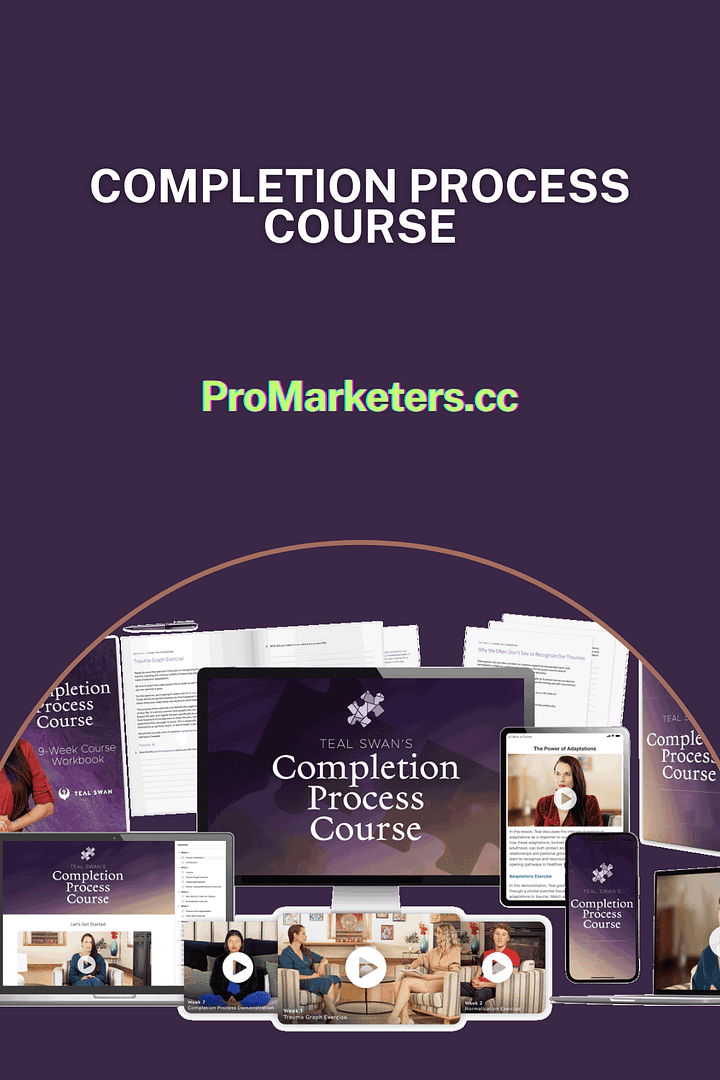
Description

Teal Swan’s Completion Process Course teaches you an 18-step guided visualization to trace triggers back to unresolved childhood memories and integrate them with your adult perspective. You’ll practice emotional vipassana, validate feelings, and address core wounds for real, lasting change. Learn at your pace with concise guidance, exercises, and community support. You can book a free 20-minute discovery session or work one-on-one with certified practitioners for personalized help. Keep going to see how it all fits together.
What the Completion Process Is and Why It Matters
Although it may look like a simple meditation, the Completion Process is a structured 18‑step visualization that guides you from a present trigger back to your earliest related memories so you can re-experience and integrate them with your adult perspective. You track an emotional reaction, follow it to its origin, and meet the younger you who still holds that pain. By staying with the feelings instead of avoiding them, you transform the memory imprint with your current resources.
This matters because unresolved trauma often drives anxiety, depression, and repeating patterns. The process separates pain relief from true healing: you don’t just soothe symptoms—you confront the core wound so it can complete. As those roots resolve, triggers fade, your choices expand, and daily life feels less reactive and more connected.
You can do this work with certified practitioners who provide attuned guidance and safety. Their personalized support helps you access emotions, stay present, and integrate breakthroughs responsibly.
Understanding Trauma, Triggers, and Lasting Change
Now that you know how the Completion Process works, it helps to name what it targets: trauma, the triggers it leaves behind, and the kind of change that lasts. Trauma is unresolved distress—often rooted in childhood—that shows up as anxiety, numbness, conflict, or even physical symptoms. Triggers are the reminders. They flare when current events resemble past pain, pushing you to confront the memories and unmet needs you couldn’t handle then.
Instead of avoiding triggers, you’ll use them as doorways. With techniques like emotional vipassana and precise validation, you stay present with the felt sense, follow it back, and re-experience the memory while bringing your adult awareness to meet your inner child’s needs. This isn’t comfortable. Real healing asks you to face the pain directly, not manage around it.
As you consistently complete unresolved experiences, the charge fades. Triggers lose intensity, your nervous system settles, and your choices align with well-being. That’s lasting change.
Step-by-Step Flow of the Completion Process
Before diving into each step, get oriented to the flow: you start with a present-day trigger, slow down to feel it directly, and invite the earliest memory it links to. You attune to sensations and emotions without fixing them. Using emotional vipassana, you observe the feeling’s texture, location, and impulse. Then you allow the memory to surface with curiosity and validate whatever shows up—images, words, or body sensations.
When the scene clarifies, you identify the child self within it. You enter as the capable adult self and offer presence, protection, and reassurance. You ask what the child needs now and provide it inside the visualization: advocacy, comfort, boundaries, or truth. You validate every feeling and let it complete, rather than suppress.
As resolution unfolds, you retrieve the lost aspects of self, integrate them, and update your present-day perspective. Afterward, you recheck the original trigger. With practice, triggers fade, self-worth strengthens, and your future feels more assured.
Course Format, Resources, and How to Participate
You’ll start with an E‑Course you can work through at your own pace, then add one‑on‑one sessions and community forums for support. To enroll, schedule a free 20‑minute discovery session, create your account, and choose your preferred learning path. Once inside, you’ll access step‑by‑step lessons, free self‑healing exercises, and booking options for certified practitioners.
Course Structure Overview
Although deeply personal, the Completion Process Course is structured for clarity and ease: it’s a self-paced E‑Course that lets you move through guided visualizations, emotional wellness exercises, and self-awareness tools on your schedule. You decide the rhythm, return to modules as needed, and integrate insights between sessions.
You’ll receive concise video or audio guidance, downloadable exercises, and prompts designed to build self-awareness and emotional resilience. To deepen your practice, you can book one‑on‑one sessions with certified practitioners who tailor strategies to your specific patterns and goals, offering feedback that complements the core lessons.
You’re also invited to join community forums to exchange experiences, ask questions, and learn vicariously from others’ breakthroughs. This peer space reinforces accountability and normalizes the healing process, while keeping your journey uniquely yours.
Enrollment and Access Steps
Once you’re ready to begin, enroll in the Completion Process E‑Course to access your dashboard, where you can immediately access guided visualizations, exercises, and module materials. Create your account, confirm your email, and log in to start at your own pace. The course’s self-implementation format lets you move through modules when you’re ready, revisit lessons, and track progress.
Begin with the structured framework to explore emotions and understand trauma. Use the guided practices to build consistency and deepen self-discovery. Choose your path: stay self-guided or add personalized support from certified practitioners for tailored strategies.
Join the community forum to share experiences, ask questions, and learn from peers on similar healing journeys. Check announcements for updates, recommended sequences, and live opportunities. Keep notes, reflect after sessions, and adjust your plan as insights emerge.
Working With Certified Practitioners and One-On-One Support
Working one-on-one with a certified practitioner gives you personalized support, a safe space to address deep-rooted emotions, and steady encouragement. You’ll benefit from a structured approach—brief background conversation and guided meditation—before moving into the Completion Process, whether sessions are on Zoom/Skype or in person. Next, here’s how to find qualified practitioners you can trust.
Benefits of One-on-One
Because healing is deeply personal, one-on-one sessions with certified practitioners give you focused, tailored support in a safe space for emotional expression and repair. You receive guidance through the Completion Process that directly addresses your history, triggers, and unmet needs. Sessions typically open with a guided meditation and a brief conversation to build trust and clarify your goals, so you feel grounded and understood before deeper work begins. With trained professionals, you’ll access methods that increase self-awareness, regulate emotions, and resolve unresolved trauma at a pace that fits you. Many clients report tangible shifts—more compassion for themselves, clearer boundaries, and confidence managing triggers—because the support is individualized and consistent.
1) Personalized pacing and goals.
2) Safe, attuned emotional processing.
3) Targeted trauma-informed strategies.
4) Measurable growth and self-compassion.
Finding Certified Practitioners
You’ve seen how one-on-one support accelerates healing; the next step is finding a certified practitioner who fits your needs. Look for practitioners trained in The Completion Process who prioritize safety, trust, and personalization. You can work via Zoom/Skype or in-person, so choose what supports your comfort and schedule.
Expect sessions to begin with a guided meditation and an initial conversation about your background, current challenges, and goals. This structure helps your practitioner tailor the process to issues like family trauma, addictions, and anxiety. Practitioners such as Tuuli Vahtra, with counseling and trauma-healing experience, bring specialized insight to complex emotional patterns.
If you’re unsure where to start, book a free 20-minute discovery session. You’ll clarify fit, logistics, and desired outcomes, and map your next steps toward emotional restoration.
Community, Activities, and Ongoing Self-Healing Tools
Even as you learn the techniques, the real momentum comes from engaging with a supportive community and simple, consistent practices. You’ll find a forum where you can share experiences, ask questions, and receive encouragement from people who understand the healing journey. Use this space to normalize emotions, track progress, and refine how you apply the tools day to day.
- Join the community forum to connect with like‑minded people, discuss challenges, and receive support in a safe, moderated environment.
- Explore free resources and exercises that build emotional awareness, help you regulate, and deepen self‑reflection between sessions.
- Participate in regular activities and workshops that invite you to explore feelings, practice techniques live, and reinforce self‑discovery through guided experiences.
- Seek personalized guidance from certified practitioners while learning from others’ journeys, so you can integrate insights into daily life.
Keep applying the tools consistently. With collective support, practical activities, and ongoing development resources, you’ll sustain growth and transform patterns over time.
Frequently Asked Questions
What Is the Completion Process of a Teal Swan?
You’re asking about Teal Swan’s Completion Process. You use an 18-step guided visualization to follow your emotional triggers back to early memories, then re-experience them with curiosity, validation, and support. You connect with your inner child, offer what was missing, and resolve unmet needs. You’re aiming for true healing rather than temporary relief. You can do sessions online or in person, starting with meditation and focused dialogue to address specific pain.
What Is the Completion Process Technique?
The completion process technique is an 18-step guided visualization that helps you access and resolve unresolved trauma. You start with a current emotional trigger, track the feeling in your body, and let associated memories surface. You re-experience them with curiosity and validate your emotions. Then you bring your adult self to meet your child self’s needs inside the memory, creating safety and resolution. You address root causes, not symptoms, supporting deep emotional healing and transformation.
What Are the Stages in the Completion Process?
The stages move you from trigger to healing: feel the trigger, invite the memory, witness it, validate yourself, find the root need, meet the inner child’s needs, offer protection, give comfort, retrieve and integrate the child, reframe beliefs, choose new actions, practice self-soothing, create a safe inner space, anchor resolution, test triggers, repeat as needed, seek support, and close with care. Worried it’s overwhelming? You’ll take one clear, guided step at a time.
What Are Teal Swan’s Qualifications?
Teal Swan’s qualifications center on her experience as an author, speaker, and spiritual teacher in personal development. You’ll find she’s developed healing methods informed by counseling, trauma recovery, and mindfulness practices. She’s taught workshops and seminars worldwide for over a decade. She’s a survivor of severe childhood trauma, which shapes her trauma-informed approach. While not a licensed clinician, she’s recognized internationally and maintains a substantial online following offering resources for emotional healing.
Conclusion
You’ve seen what the Completion Process is, why it matters, and how it creates lasting change. You’ll notice triggers, you’ll follow the steps, and you’ll meet the parts of you that need care. You can join the course, access resources, and work with certified practitioners. You can connect with community, practice the tools, and keep healing. Start where you are, stay with what arises, and step into wholeness—one honest breath, one guided session, one courageous choice at a time.