

Description
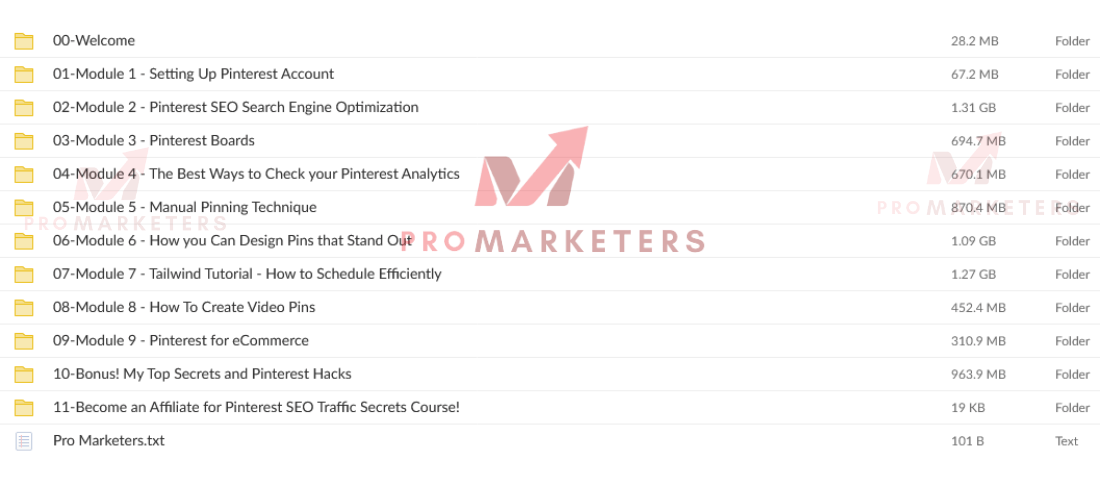
Pinterest SEO Traffic Secrets is a structured guide that shows how to grow steady traffic from Pinterest with clear SEO steps. It includes keyword research for Pins and boards, building topic clusters, writing titles and descriptions aligned to search intent. It breaks down fresh vs repins, perfect image specs and rich Pins setup for more reach. It features posting schedules, seasonal trends by month, and analytics to monitor saves, outbound clicks, and CTR. It suits bloggers, tiny stores and service brands that need dirt-cheap, evergreen traffic. To keep it practical, the course combines brief lessons with checklists, Pin templates, and example workflows. The chapters below demystify each component.
Foundational Pinterest SEO
A distinct Pinterest marketing strategy offers form, accelerates blog traffic, and multiplies site visitors over months and many years.
-
Toggle to a Business account for analytics, ads and audience insights.
-
Claim your domain to unleash Rich Pins and more trust.
-
Create niche boards that reflect your site structure and key terms.
-
Match board topics to your primary content pillars for tidy relevancy
-
Use a steady pin schedule to scale without burnout
-
Monitor clicks, saves, and outbound visits to optimize what hits
Business Profile
Business accounts provide early access to new features, which are essential for a successful Pinterest marketing strategy. These tools help identify which boards, pins, and topics generate saves and clicks, amplifying them effectively. This is particularly crucial when Pinterest is a primary driver of blog traffic — we’ve seen sites with 95% of their traffic coming from Pinterest.
To enhance your Pinterest SEO strategy, craft a profile description that includes your primary keywords, product or content focus, and location if applicable. Make it clear and relatable. For instance: “Minimal home decor, renter-friendly hacks, and budget DIY guides.”
Use a crisp logo or crisp headshot. Go for a square image that loads at a decent size on mobile. Brand colors consistent on board covers and pin designs.
Additionally, connect your site and principal social channels. Cross-post top pins in your email, blog sidebar, and profiles! A powerful pin can continue to drive free traffic for years, with some pins from 2017 still sending visitors today.
Domain Claiming
Claim your site to verify ownership, display your URL on your profile and enable Rich Pins pulling titles and meta data. Rich Pins increase context and clickthrough rates on blog posts, products and recipes.
Display your domain on the profile header to establish trust with fresh eyes. It assists brand recall.
Use google analytics to track pinterest as a source / medium, watch landing pages and time on page. Change subjects and style quickly. A few profiles post traffic quadruples in a matter of weeks.
Link all new posts to that same claimed domain. Maintain UTM tags to track pins and seasons against one another over time.
Board Curation
-
Map 5–10 niche boards to your site’s main topics
-
Add 20–40 relevant pins per board to seed context
-
Use branded covers for clarity and scan speed
-
Prune weak pins; archive off-niche boards
Label your Pinterest boards with effective keywords. For example, use terms like “Vegan Meal Prep” or “Minimalist Wardrobe” to enhance your Pinterest SEO strategy. Write descriptions that incorporate 2–3 relevant key phrases along with a concise value line to improve visibility in search results.
Make sure to position your best Pinterest boards prominently. Place money pages and top content in the top row to attract more clicks and maximize blog traffic. Regularly refresh your boards each week, as new pins can significantly boost engagement and site traffic. Utilizing a scheduler can save time and maintain a steady posting cadence.
The results can scale quickly: many users report increases from 4-figure yearly views to 5-figure monthly views. This can lead to impressive affiliate wins, such as earning $498.00 from a single pin, eliminating the long wait associated with traditional Google SEO strategies.
Mastering Pinterest SEO Keywords
Pinterest SEO is fundamentally about search, not just followers. Implementing effective pinterest marketing strategies can elevate reach, clicks, and conversions, even with a modest audience. When boards and pins are optimized with relevant keywords, numerous accounts experience 2,000 page views a day and over 300,000 monthly page views. As Pinterest’s algorithm no longer prioritizes only ‘fresh’ pins, staying engaged with keywords becomes essential for maximizing blog traffic.
User Intent
Begin with the intent. Look at the search bar autosuggest, your own previous engagement, and audience insights to find out what they expect when they type a phrase. A searcher for ‘easy vegan dinners’ typically needs simple, quick recipes. ‘Vegan meal prep for work’ indicates batch-cook steps and storage tips.
Group keywords by intent:
-
Informational: “how to start hydroponics at home,” “SEO checklist for beginners”
-
Inspirational: “minimalist home office ideas,” “spring outfit boards”
-
Transactional: “best carry-on backpacks 40 L,” “wedding invitation templates”
Align with business objectives. If affiliate sales is your aim, lean into transactional terms with buyer cues such as “best,” “review,” “under $50.” If list growth is your objective, lean toward informational guides with lead magnets. Intent tailored to goals fuels quality traffic and boosts engagement rates. 49% achievable on well-matched profiles.
Keyword Sources
Start with Pinterest: type a root term, scan autosuggest, open the Explore and Trends tabs, and note seasonal swings. Keywords such as ‘fall capsule wardrobe 2024’ tend to experience a bang at season start.
Pull overlaps from google serpi and other places. If “Mediterranean diet lunch” is trending on Google and TikTok, then it’s probably workable on Pinterest as well.
Create an extensive list. Include core phrases and long tails: “camping meals,” “no-cook camping meals,” “vegetarian camping foil packs.” More diversity = more entry points.
Research your competition. Audit top boards, repeat title formulas, and gaps. If no one goes after “small balcony herb plan,” that’s a niche.
Strategic Placement
Lead with this main keyword in titles and the first 100 characters of descriptions. Sneak 1-2 secondary terms naturally, then a compelling call to action.
Utilize keywords in board titles (“Budget Travel Europe”), descriptions and pin alt text. No stuffing, write for people first.
Test where. See impressions, saves, outbound clicks, and engagement by keyword set. Rankings fluctuate and followers can be bot-boosted so judge by clicks. Pinterest is much less crowded than Google, so do consistent SEO-optimized boards and pins and you can get steady clicks and 400‒450 new followers/week, even from small bases!
The Anatomy of a Perfect Pin
The anatomy of a perfect pin involves a little smart design combined with clear copy, a direct call-to-action, and a relevant link. When executed correctly, this Pinterest SEO strategy drives steady blog traffic, ranks well in Pinterest search results, and can keep compounding for months.
1. Visual Psychology
Go with bold colors that really pop on a white feed, 2–3 readable fonts max. Choose 2:3 aspect ratio, crisp images, and simple overlays. Make text large enough to read on small screens.
Rely on contrast, alignment and whitespace to lead the reader’s eye from image to headline to call-to-action. High-contrast pins tend to score better for visibility and can boost virality rating — one team experienced a 49% engagement rate with a 4.2 virality rating on a clean, contrast-heavy design.
Show brand cues every time—logo placement, a color set and border frame style. This creates recall and trust and quicker clicks over time, even as competition has increased and stale strategies have dropped off.
Test two or three styles at a time: photo vs. Illustration, warm vs. Cool palettes, tight crop vs. Negative space. Save what wins on views, saves and clicks. One style of pin continued to send traffic 6 months later — showing that good visuals have the potential to be evergreen.
2. Compelling Copy
Lead with a tight, benefit-first headline that matches the key primary word and topic. 30-Min Home Workout Plan (No Gear)” trumps fuzzy language.
Use concrete, action words and clear outcomes: “See the checklist,” “Compare models,” “Save €200 with these tips.” Connect copy to a reader’s requirement–budget, time, skill level–to increase Pinterest SEO cues and motivation.
Add timely hooks when it fits: “holiday recipes,” “back-to-school,” or “summer outfits.” Seasonal and trending phrases can boost search rankings quickly. One campaign leaped from 1,500 to 30,000 views in a day with a crisp headline and timely keyword.
3. Clear Call-to-Action
Place a single CTA on the pin: “Read more,” “Shop now,” or “Get the guide.” Make it brief, eye-catching and above the fold.
Align the CTA with your funnel stage. Blog posts go for reads and saves, products to shop, lead magnets to ‘Download’. Then A/B test wording and placement. Strong CTAs help pins fuel affiliate income–one tracked $498 commission from a months-old pin–and can support big lifts like 121 to 86,000 daily page views in 5 months.
4. Destination URL
Link to a quick, mobile-friendly page that reflects pin promise. Line up headline + visuals to reduce bounce
Track with Google Analytics and Pinterest Analytics. Watch saves, outbound clicks and time on page. Update links if pages shift. Broken URLs slay momentum and SEO. Add UTM tags (source=pinterest, medium=social, campaign=pin_title) to track each pin and board. Smart workflows–templated designs, content batching–allow you to scale without daily image churn, pulling your monthly views skyward—up to 2.3 million and beyond.
Advanced Pinning Strategies
Advanced pinning involves sustained output, massive relevancy, and effective SEO tips. By utilizing SEO optimized boards and high volume keywords, you can improve your Pinterest marketing strategy for faster placement in search results, maintaining momentum with a steady posting schedule.
Content Velocity
To boost your blog traffic, post new pins regularly to indicate freshness and enhance overall account quality. A reasonable rhythm is 3–10 pins per day with a scheduler, distributed across time zones to maximize monthly impressions. Maintain a queue to ensure activity never stalls during busy weeks, which is a key aspect of a successful Pinterest marketing strategy.
Repurpose each blog post into 5–10 designs with fresh colors, alternate titles, and new crops. For example, one recipe can yield a step collage, a single hero shot, a short video, and a text-forward infographic, showcasing effective Pinterest optimization techniques.
Combine new and timeless posts to keep traffic stable after seasonal surges. Evergreen boards—guides, checklists, and basic how-tos—garner saves and long-tail clicks for months, contributing to a solid Pinterest SEO strategy.
Measure saves, outbound clicks, and engagement rate. If saves fall below your board median, reduce frequency, alter the color palette, or try a shorter title overlay. Focus on 30-day trends rather than 24-hour swings to maintain momentum in your Pinterest marketing efforts.
Relevancy Signals
Match pins to seasonal peaks and trends with Pinterest Trends data. About: advanced pinning strategies 4) Tie your content to global dates with universal appeal (e.g. End-of-year gifting) & use metric units in graphics to stay global-friendly
Keep branding consistent: same logo mark, font pair, and a narrow color set. This aids the algorithm in clustering your content and builds niche authority.
Join niche group boards or communities which have engaged members. Share targeted pins that comply with board regulations, don’t drop off-topic bombs that create noise.
Archive or relist off-topic and weak pins. Clean boards increase topical clarity and help with search placement for core keywords.
Idea Pins
Construct step-by-step tutorials, BTS clips, or speedy product demos. Leave your first frame clean with a straightforward promise and easy to read text.
Apply smart pinning. Accentuate with stickers, lists, or quizzes to increase on-pin time and completion rate.
Tag title, stickers, and notes with keywords. Put top words in the first 40–60 characters; mirror these in board descriptions and alt text for a more powerful data match.
Quick saves and shares with a direct call to action. A single viral Idea Pin can direct consistent traffic for months and combined with high volume keywords and ranking colors can increase total site clicks 300% in a few months and maintain semi-passive revenue.
Beyond the Pin: Algorithmic Signals
Pinterest orders content based on relevance, freshness, and evidence of value, which is crucial for effective Pinterest marketing. Engagement, network breadth, and external signals all contribute to this evidence. Since these results can be slow and uneven, it’s essential to plan your Pinterest SEO strategy over weeks or months to build traction.
User Engagement
Saves, clicks, and comments are all core signals in your Pinterest marketing strategy. Pose a direct question in the pin text, insert a poll in Idea Pins, or use concise CTAs such as “save for later,” “tap for full guide,” or “comment with your challenge.” Target obvious suggestions associated with the pin’s pledge to boost blog traffic.
Respond quickly to comments and DMs, as even a quick reply within 24 hours can nudge repeat visits and inject new activity that the Pinterest algorithm can parse.
Monitor close-ups, clicks, saves, and CTR in Pinterest Analytics to fine-tune your Pinterest SEO strategy. Sort by saves-to-impressions ratio to identify themes and formats that drive massive traffic.
Offer reasons to save and share: checklists, step-by-step visuals, or seasonal guides. Add UTM tags and Pinterest keywords that align with search intent to enhance your Pinterest optimization efforts. Anticipate a lift delay—think an October pin that can peak in January—and some can remain viral for over 6 months.
Content Ecosystem
Connect related pins into topic clusters. Use sustainable keywords in your pin titles, descriptions and board names, then direct each pin back to a related blog post with a corresponding H1 and meta description.
Feature pins on your Instagram Stories and LinkedIn posts with an explicit value hook. Share carousels with a ‘see full steps on Pinterest’ link.
Collaborate with creators in related niches. Exchange board posts or co-produce a series to reach new subscribers.
Post new pins frequently. Queue it all to keep the feed moving across time zones — not spamming the same old graphics, year after year.
Off-Platform Factors
Share some pins in public communities that permit promotion, and highlight them in email newsletters with short use cases. This can jump-start early action when the race is crowded.
Work for backlinks to important pins and your profile from guides, roundups, and resource pages. Good links confirm trust and support findability.
Ask delighted readers or customers to save or share pins. Offer shareable assets.
Compare referral sources and UTM-tagged pins in Google Analytics. Double down on the sources that deliver the highest quality sessions.
Measuring SEO Success
What will you measure and why? You need numbers to measure success, not hunches. Track Pinterest marketing results and site traffic as well, because pin reach without clicks or sales is just noise.
-
Impressions and engaged impressions (pin-level)
-
Outbound clicks to site (pin and board)
-
Saves (as proxy for relevance and future intent)
-
Follower growth and audience affinity
-
Keyword rankings on Pinterest search and Google
-
Landing-page bounce rate, time on page, pages per session.
-
Assisted and last-click conversions, revenue, AOV
-
Pin design experiments (CTR by creative design controls ~50% of performance)
-
Posting cadence vs. Results (per day/week)
-
Traffic stability with time (flatter curves indicate more sustainable SEO)
Pinterest Analytics
Monitor your growth trends, identify your top performing formats and segment by pin type or board to discover what your users desire. Saves and engaged impressions indicate whether your keywords and visuals align with intent. Export your reports every month to maintain a side-by-side view and compare periods. What worked a year ago may not be today.
|
Metric |
What it shows |
Where to find |
Action |
|---|---|---|---|
|
Impressions |
Search reach |
Analytics > Overview |
Refine keywords |
|
Engaged impressions |
Quality of reach |
Analytics > Engagement |
Improve hooks |
|
Outbound clicks |
Site impact |
Analytics > Outbound |
Scale winners |
|
Saves |
Future traffic |
Pin stats |
Repeat themes |
|
Follower growth |
Brand lift |
Audience |
Plan series |
|
Top formats |
Format fit |
Content > Trends |
Shift mix |
Break down by pin type (static, video, idea), board topic and campaign tags. Export CSV to construct a monthly KPI table and identify gaps quickly.
Website Analytics
Pinterest traffic has to demonstrate value on-site. Benchmark it against other social platforms to direct time and spend.
|
Source |
Sessions |
Bounce |
Pages/Session |
Conv. Rate |
|---|---|---|---|---|
|
|
12,400 |
52% |
2.1 |
|
|
1.9% |
|
|
|
|
| Instagram | 4,300 | 68% | 1.5 | 0.8% |
| Facebook | 5,900 | 62% | 1.7 | 1.1% |
We set GA4 events for “Add to cart,” “Checkout,” “Lead submit.” DisplayLandingpage load speed, fold content and internal links to increase retention. Anticipate 6–12 months for semi-passive gains and steadier traffic curves.
Iterative Improvement
Review dashboards weekly and run monthly deep dives to enhance your blogging strategy. Test new pin designs, hooks, and popular keywords while keeping control pins to isolate changes. Ask users what made them click or save—polls and comments can provide valuable insights for your Pinterest marketing techniques. Record lessons learned, retire stale strategies, and refresh your checklist, as SEO changes and styles get old. Continue to ship minor, data-driven adjustments to improve your Pinterest SEO strategy and boost blog traffic.
Conclusion
To sum it up, effective Pinterest SEO requires defined actions and consistent efforts. Use close keywords. Create clean pins with crisp photos, concise headlines, and evidence in the copy. Publish on a schedule. Monitor important metrics such as saves, clicks, and click-through rate. Slash lousy pins. Double down on winners pins.
For quick wins, test new pin art for a single top post. Try two title switches with the same keyword group. Pin during peak times, such as early evening. Compare saves and link clicks over 7 days. Keep the upper set. Rinse, repeat.
To get more in-depth, get a course with live pin teardowns, keyword sprints, and audit checklists. Need assist selecting the ideal suit? Leave your niche + goals and I’ll post a short list.


